
Introduction to Steel Doors
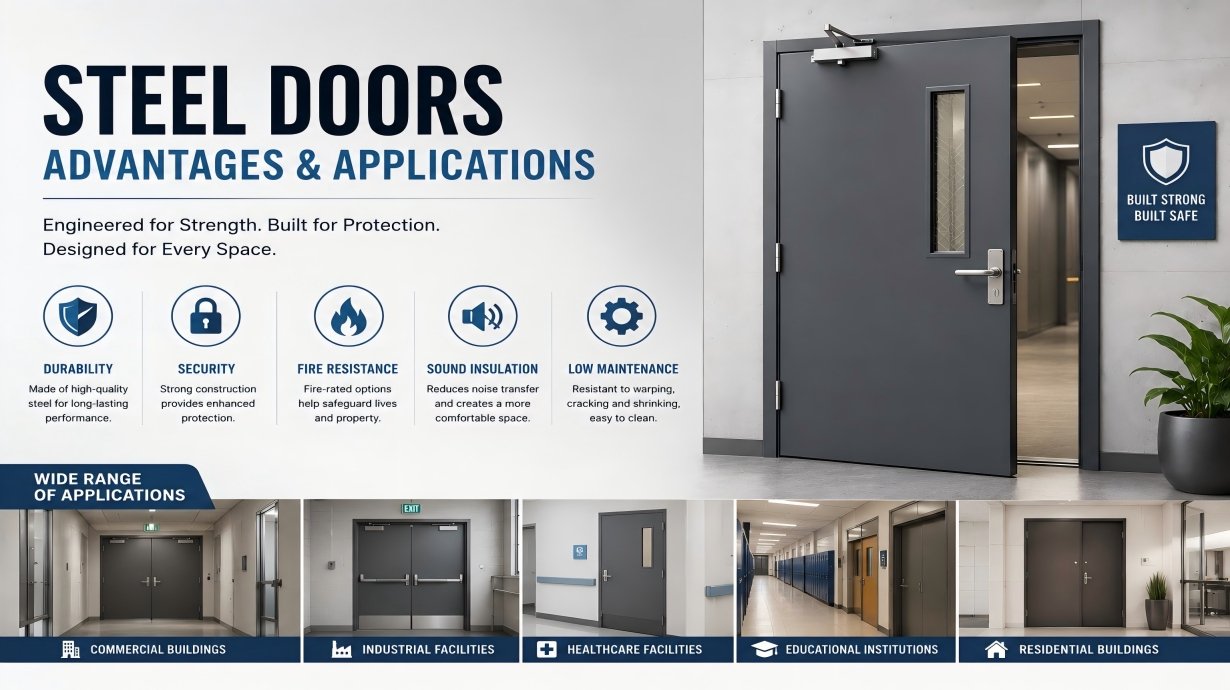
Steel doors are doors crafted from steel materials. They are renowned for their high level of security and durability. These doors are commonly used in commercial buildings, industrial facilities, and places with high – security requirements. The construction of steel doors typically involves using steel plates, which are often treated to prevent rust, and then painted on the surface for a more appealing look.
Key Features of Steel Doors
Security
One of the most significant features of steel doors is their security. The heavy – duty nature of steel makes it extremely difficult for unauthorized entry. For example, in a bank or a high – end jewelry store, steel doors can act as a strong barrier against theft. Thieves would find it nearly impossible to break through a well – constructed steel door, as was the case where heavy steel doors thwarted thieves’ attempts to open a safe.
Durability
Steel is a robust material that can withstand a lot of wear and tear. It is resistant to impacts, scratches, and even harsh weather conditions. In industrial settings, where there is a lot of heavy machinery movement and potential for accidental collisions, steel doors can maintain their integrity over a long period. They do not warp or rot like some wooden doors, which makes them a long – term investment for property owners.
Low Maintenance
Compared to other types of doors, steel doors require relatively low maintenance. A simple cleaning with a mild detergent and water is usually sufficient to keep them looking good. There is no need for regular staining or sealing as with wooden doors. This low – maintenance characteristic makes steel doors an attractive option for busy commercial property managers and homeowners.
Different Types of Steel Doors
Standard Steel Doors
These are the most common type of steel doors. They are used in a variety of settings, from residential garages to commercial building entrances. Standard steel doors are usually made of a single layer of steel and are available in different thicknesses. Thicker doors offer more security and durability.
Fire – Rated Steel Doors
Fire – rated steel doors are designed to prevent the spread of fire and smoke in a building. They are commonly used in commercial and industrial buildings, as well as in some high – rise residential buildings. These doors are tested and certified to meet specific fire – resistance ratings, which means they can withstand fire for a certain period, giving occupants more time to evacuate safely.
Decorative Steel Doors
In recent years, there has been an increasing demand for decorative steel doors. These doors combine the strength of steel with aesthetic appeal. They can be customized with different patterns, designs, and finishes to match the architectural style of a building. For example, some decorative steel doors have intricate wrought – iron – like patterns laser – cut into the steel, adding a touch of elegance to a home’s entrance.
Applications of Steel Doors
Commercial Buildings
In commercial buildings such as offices, shops, and warehouses, steel doors are widely used. For offices, steel doors can provide security during non – working hours. In shops, they can protect merchandise from theft. Warehouses often use large, industrial – grade steel doors that can withstand the constant opening and closing of heavy – duty equipment.
Industrial Facilities
Industrial facilities like factories and manufacturing plants rely heavily on steel doors. These doors can handle the heavy traffic of workers, machinery, and raw materials. They also offer protection against environmental factors such as dust and debris. For example, in a steel manufacturing plant, the steel doors need to be able to withstand high temperatures and heavy impacts.
Residential Use
In residential settings, steel doors are commonly used for garage entrances and main entrances. Garage steel doors provide security for vehicles and storage items. Main entrance steel doors can enhance the security of a home while also adding to its curb appeal. Many homeowners choose steel doors for their energy – efficiency as well, as they can help to keep the home insulated.
Manufacturing and Customization of Steel Doors
Manufacturing Process
The manufacturing of steel doors starts with the selection of high – quality steel materials. The steel is then cut, shaped, and welded according to the design specifications. After that, the door goes through a surface treatment process, which may include rust prevention and painting. Finally, the door is assembled with hinges, locks, and other hardware.
Customization Options
Steel doors offer a wide range of customization options. Customers can choose the size, color, style, and finish of the door. For example, the color can be customized to match the exterior of a building. The style can range from modern and minimalist to traditional and ornate. Additionally, the hardware such as handles and locks can also be selected according to the customer’s preferences.
Market Trends and Future Outlook
Market Trends
Currently, the market for steel doors is growing steadily. There is an increasing demand for high – security and energy – efficient doors. Consumers are also becoming more interested in the aesthetic aspects of steel doors, leading to a rise in the popularity of decorative steel doors. In addition, the trend of modular construction has also contributed to the demand for steel doors, as they are often used in modular buildings.
Future Outlook
Looking ahead, the future of steel doors seems promising. With the continuous development of technology, we can expect to see more advanced steel door products. For example, smart steel doors with features such as fingerprint recognition and remote control may become more common. Also, there will likely be an emphasis on more sustainable manufacturing processes and materials in the production of steel doors.
In conclusion, steel doors are a versatile and reliable choice for a wide range of applications. Their security, durability, and low – maintenance characteristics make them a popular option in both commercial and residential settings. As the market continues to evolve, we can expect to see even more innovative and high – quality steel door products in the future.